Happy 250th Birthday, America
June 29th, 2026 |

Myths, Misconceptions & Little-Known Facts About the Declaration of Independence
If you find this blog of interest, check out Greg Bustin’s Decision Time: Inspiration, Insight & Wisdom from History’s Make-or-Break Moments that offers bite-sized lessons from fifty-two of history’s most consequential moments, including the Summer of 1776.
Americans will celebrate our nation’s 250th birthday next week.
You know this.
Yet it’s likely most people don’t know what’s in the document that declared America’s independence from Great Britain because they’ve never read it.
Fewer still can separate fact from fiction and myth from truth about a document that has inspired the democratic governance of other nations.
Did you know…
Lee said it, Jefferson copied it. On June 7, 1776, Richard Henry Lee of Virginia proposed, “That these United Colonies are, and of right ought to be, free and independent States, that they are absolved from all allegiance to the British Crown, and that all political connection between them and the State of Great Britain is, and ought to be, totally dissolved.” Jefferson copied Lee’s words into his final draft.
Not united. Lee’s resolution sparked a heated debate. The fifty-six delegates of the Second Continental Congress were not aligned. There were three factions: those wanting to restore conditions with Great Britain to pre-1763 conditions; those believing Parliament had overstepped its governance; and those favoring independence. In a political move repeated through the ages, John Hancock ordered a recess on June 11 and delayed a vote until July 1, allowing tempers to cool and minds to be changed.
Jefferson wasn’t the first choice. Or even the second. Before the recess, Congress appointed the Committee of Five to prepare a document for a vote: John Adams, Ben Franklin, Thomas Jefferson, Robert Livingston and Roger Sherman. Given his reputation and prowess as a storyteller with Poor Richard’s Almanac, Franklin was the clear favorite to prepare the draft. He declined, saying, “I have made a rule…to avoid becoming a draughtsman of papers to be reviewed by a public body.” Adams had a sharp legal mind but already chaired twenty-three different committees and recognized his hard-charging personality would be a distraction. Adams persuaded Jefferson, saying, “Reason one: You are a Virginian, and a Virginian ought to appear at the head of this business. Reason two: I am obnoxious, suspected, and unpopular. You are very much otherwise. Reason three: You can write ten times better than I.”
Jefferson did most of the writing; Franklin made one big change. In its first meeting on June 11, the Committee of Five agreed on the document’s framework then assigned the writing to Jefferson. Working on a portable wooden writing box of his own invention, Jefferson outlined, wrote and rewrote the draft, using elegiac language to frame the argument for independence with potent ideas (he changed the word “subjects” in his draft to “citizens”). Before presenting his draft to the full committee, Jefferson shared his draft privately on June 23 with Adams and Franklin who made stylistic edits. Franklin made one big change, suggesting the opening line be changed from, “We hold these truths to be sacred and undeniable” to “We hold these truths to be self-evident.”
Congress left the best part alone. The draft was presented to Congress on Friday, June 28, as the British fleet carrying nine thousand redcoats was sighted off the Long Island coast. Over the next three days, Congress made eighty-five revisions, focusing on the grievances outlined in the document and all but ignoring Jefferson’s inspiring opening.
They avoided the elephant in the room. The signers of the Declaration of Independence deliberately skirted the difficult issues of slavery, women’s rights and civil rights. Though he owned slaves, Jefferson included language condemning the British promotion of the slave trade; this criticism was removed in spite of Jefferson’s objections. Adams’ intent during the debates was to keep everyone’s eyes on the prize: independence. Other issues, Adams argued in what many consider the most significant speech of his distinguished career, would have to wait.
The Declaration of Independence wasn’t signed on July 4. After completing the document, the vote was held on July 2. Twelve of the thirteen colonies voted for independence. New York abstained, waiting for instructions. The New York delegates endorsed the decision a week later on July 9. Most delegates didn’t sign the document until August 2.
Conspicuous by his absence. George Washington was unable to attend the Continental Congress in Philadelphia because he was in New York City preparing his troops for an anticipated British invasion. To boost morale, Washington ordered the document to be read aloud to his soldiers on July 9.
Youngest, oldest and in between. The two youngest signers were just twenty-six. Thirty-nine of the fifty-six signers were aged thirty-nine years or younger. Jefferson was thirty-three when he wrote what is considered one of the greatest documents ever written. Seventeen of the delegates were forty years old or older. John Adams was the only forty-year-old in the bunch. Franklin was the oldest at seventy.
The Über-Signer. America’s four most important documents are the Articles of Association (1774 agreement boycotting British goods), the Declaration of Independence (1776), the Articles of Confederation (1777 precursor to the Constitution) and the U.S. Constitution (1789). Only one person signed all four: Roger Sherman of Connecticut who was a member of the Committee of Five and the second oldest delegate behind Franklin.
From independence to secession. The two youngest signers were both from South Carolina: Thomas Lynch, Jr. and Edward Rutledge were twenty-six years old when they signed America’s Declaration of Independence. In one of history’s ironies, South Carolina was the first state to secede from the Union. Shots fired on Fort Sumter from Charleston on April 12, 1861, sparked America’s Civil War.
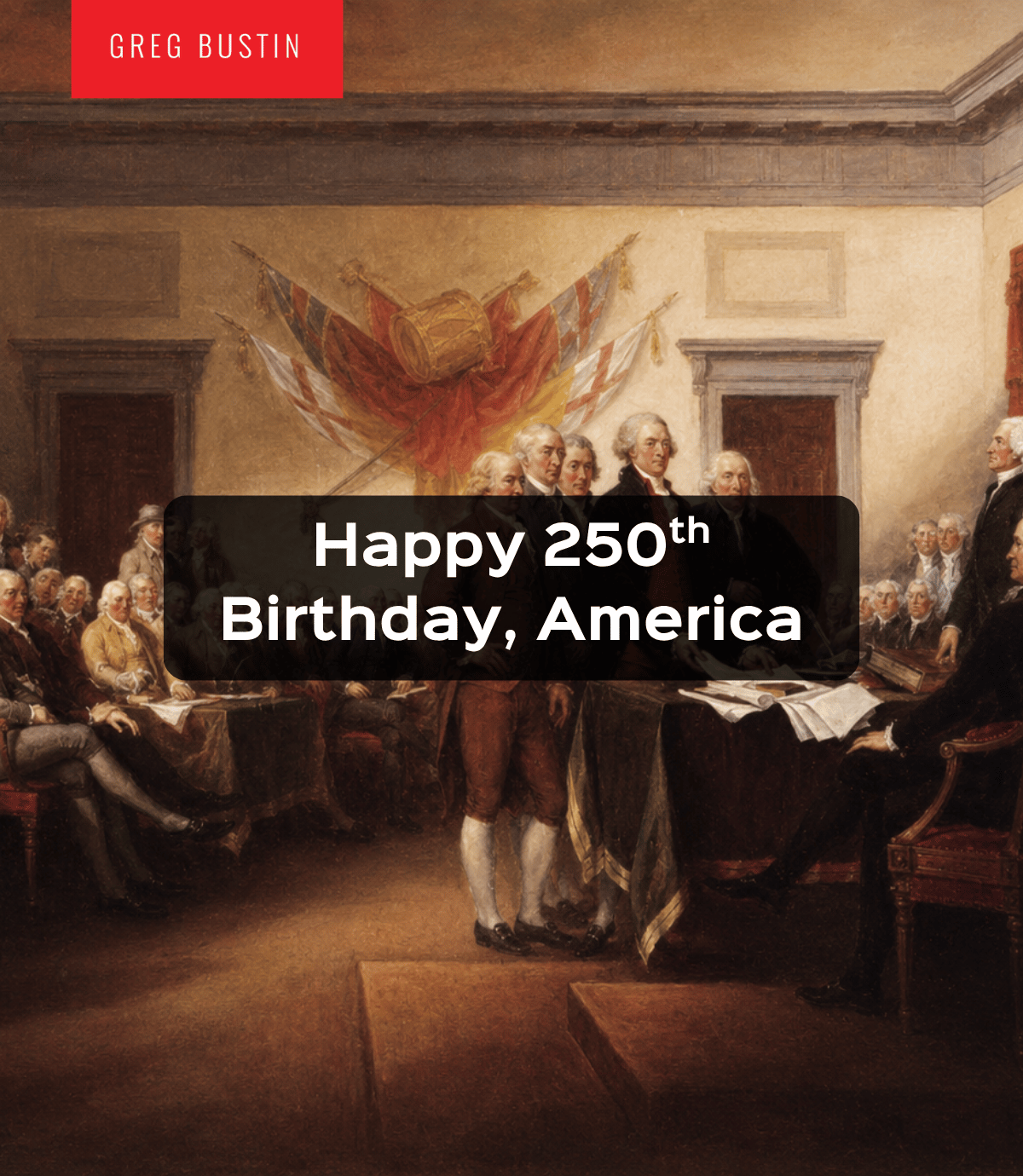
Sometimes fiction is better than fact. The famous painting by John Trumbull at the top of this blog depicts all fifty-six signers gathered together on July 4. No one signed the document that day except for John Hancock (President of Congress) and Charles Thomson (Secretary). The Secret Journals of Congress of 1821 contain two previously unpublished entries, including New York’s vote on July 9 and the August 2 entry that says the document “was signed by the Members.” The version Americans celebrate makes for a more compelling story and even better painting.
The cover up. Names of the fifty-six men who signed the document were kept a secret from the public for over six months to protect them from British retaliation. Because the document was viewed as an act of treason, only the names of John Hancock and Charles Thomson were printed. The remaining fifty-four names were made public in January 1777 following American victories at Trenton and Princeton, which boosted American morale and gave Congress confidence to publicly release the authenticated copies.
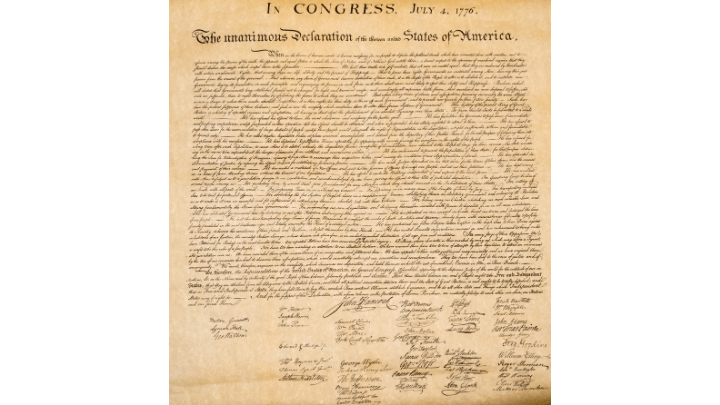
Preserving history. The Dunlap broadsides were the first published copies of the Declaration of Independence, printed on the night of July 4 by twenty-nine-year-old Irish immigrant John Dunlap of Philadelphia who spent most of that night setting type, correcting it and then printing what is believed to be two hundred broadside sheets. Two original copies are preserved at the Library of Congress in Washington, D.C. The signed copy of the Declaration on display at the National Archives in Washington, D.C., is considered the official document ordered by Congress on July 19. It was inscribed by Philadelphian Timothy Matlack (known for his excellent penmanship) and signed on August 2, 1776.
Bad news travels slowly. Great Britain was officially notified of the Declaration of Independence on August 10, 1776 when a copy of the document arrived in London aboard a British ship. Contents of the Declaration were then published in British newspapers, transforming what the British had largely viewed as a colonial rebellion over taxation and governance into a formal declaration of independence. King George III formally notified parliament on October 31, 1776.
Read the Declaration
Does all of this history compel you to read the Declaration of Independence?
It’s only 1,338 words in length.
And it’s one of the greatest documents ever written.
Whether you’re learning the facts of America’s birth for the first time or being reminded of them, in what ways do they inspire you?

Ready to reset?
Attend my free Accountability webinar: I Did It! to set and achieve your 2021 goals.

- February 17th from 11 AM – 12:30 PM Central Time
- My free webinar will help you:
– Sharpen your personal goals
– Improve time management
– Tackle tough work-related issues
– Support remote workers
Learn More
To dive even deeper into the topic of accountability, I invite you to purchase a copy of my bestselling book, “Accountability: The Key to Driving a High-Performance Culture.”
Become a better leader.
Download my three free e-books.

Free Tips
Sign up to receive free tips on business, leadership, and life.
Get My Latest Book
HOW LEADERS DECIDE
History has much to offer today’s current and aspiring leaders.
Business schools teach case studies. Hollywood blockbusters are inspired by true events.
Exceptional leaders are students of history. Decision-making comes with the territory.