The Second Berlin Wall
June 2nd, 2026 |

How the Cold War Began And What it Means to You
“The enemy of my enemy is my friend” is an ancient proverb that suggests two opposing parties can come together to fight a common adversary.
This risky strategy played out during World War II when the Western Allies and the Soviet Union joined forces in 1941 to fight Nazi Germany.
The Soviets and Americans were wary of one another from the outset but put aside their differences because they feared Hitler more than they distrusted one another.
Within three years of this shaky partnership, the Soviets demanded from the U.S. the engraving plates, ink and related equipment used to print banknotes in anticipation of the Allies occupying a defeated Germany. The Americans agreed. The Soviets justified American suspicions by printing $380 million in currency for which there was no legitimate backing, enriching themselves while sparking rampant inflation in war-torn Germany.
By May 1945, the common objective of defeating Hitler had been achieved. The victors divided Germany into British, French, American and Soviet zones.
By early 1946, financial instability throughout the region made it clear a new monetary policy was required. The existing currency was worthless. Inflation was out of control. Black-market trading (often using so-called “cigarette currency”) drove prices up to one hundred times the legal amounts on everyday items that were already hard to find.
The Americans would not transfer temporary military government to new German leaders until the economic situation was resolved. The Soviets had no interest in an economic revival in the Western zones because of their territorial ambitions.
With the common enemy vanquished, the significant differences of two opposing ideologies surfaced. The fragile trust between the U.S. and the Soviet Union was disintegrating.
Which of my relationships – personal and business – are built on convenience versus shared values?
The Cold War Begins
A single action can set in motion a larger movement that has been developing, such as “The shot heard round the world” that triggered the American Revolution.
The spark igniting the Cold War occurred seventy-eight years ago this month: June 20, 1948.
Not surprisingly, the spark was money.
After months of discussions, debates and deadlocks by the Soviets, the Western allies began meeting in June 1947 without the Soviets to establish economic policies and to develop a democratic approach to governing Germany. The objectives were to:
- invalidate the Reichsmark and introduce a new currency in Germany’s western sectors
- halt excessive money creation (such as the Soviets’ 1944 money-printing spree)
- eliminate rationing and the black market
- freeze wages and prices
- introduce fixed exchange rates
Establishing an independent central bank would provide the foundation for a legitimate commercial banking system.
By September 1947 the plan was in motion and Deutsche Mark (DM) banknotes were being printed in absolute secrecy by the American Bank Note Company in New York City and the Bureau of Engraving and Printing in Washington, D.C.
Between February and April 1948, approximately 5.7 billion DM banknotes weighing more than one thousand tons were transported by ship in 23,000 wooden crates from America to Bremerhaven, Germany. Eight heavily guarded trains carried the cargo to Frankfurt where eight hundred trucks moved the top-secret freight to vaults of the Bank Deutscher Länder in Frankfurt. Final distribution of the currency would occur through food ration card distribution centers in the Western occupation zones.
To avoid detection by Soviet spies, the plan was code-named “Operation Bird Dog.” Crates containing the new German currency were labeled “doorknobs.”
On Sunday, June 20, 1948, the Deutsche Mark was introduced.
In one sweeping masterstroke, this financial reform achieved all of its objectives and spurred an immediate psychological and economic turnaround in Germany’s Western occupation zones. This move is one of the most significant economic policy measures in post-war German history, enabling the Western zones to receive Marshall Plan aid which helped launch what became known as Wirtschaftswunder, or the Economic Miracle of the 1950s.
This action also triggered the Soviet blockade of Berlin, which occurred four days later.
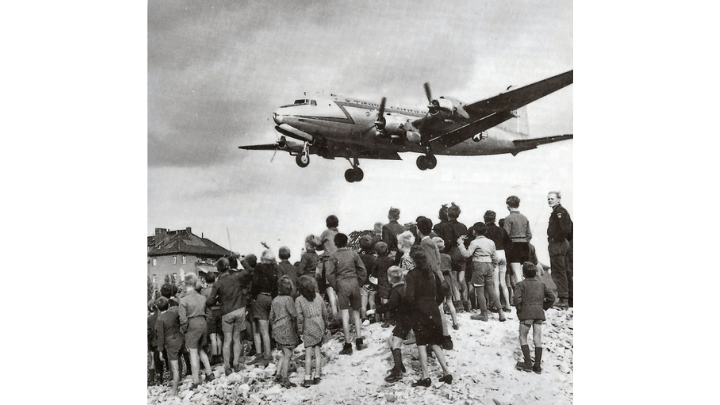
The Cold War had begun.
What hard choices – perhaps involving longstanding relationships – must be made to position us for long-term sustainable success?
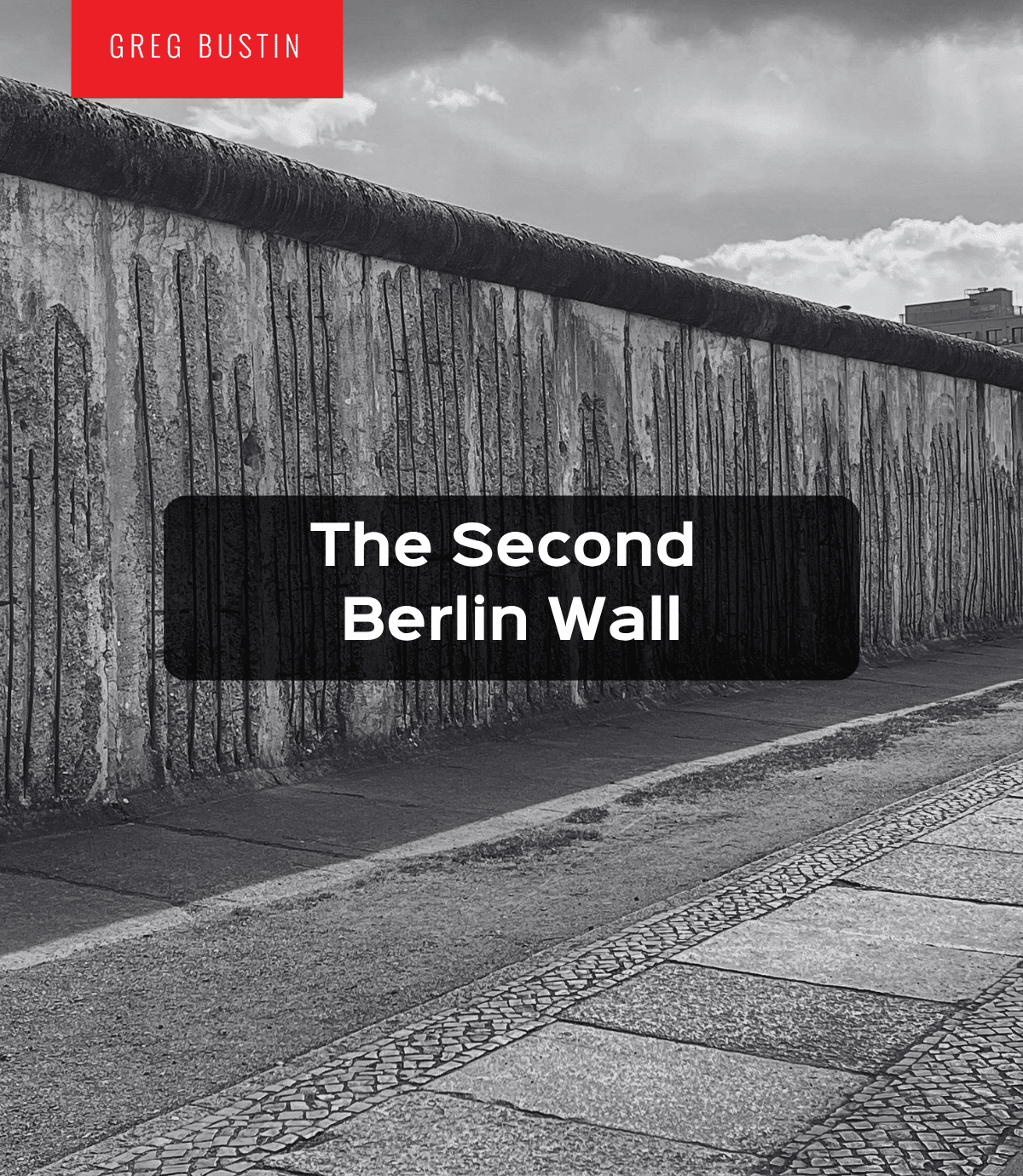
The Second Berlin Wall
Walls have encircled cities for as long as people have wanted protection from their enemies.
Few walls have been built to keep people in. Berlin is noteworthy for constructing two such walls.
Berlin’s first wall was a series of eighteen gates encircling the 18th-century city. It was built to enforce customs collections and to prevent poorly paid soldiers from deserting.
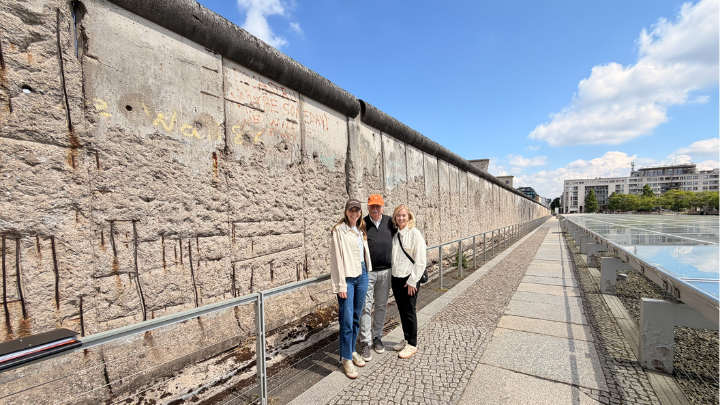
But when you say “Berlin Wall,” most people don’t think of the wall constructed in 1734. They think of the second wall constructed by the Soviets.
Between 1947 and 1953, more than 865,000 people left East Germany—a literal brain drain of the brightest minds. In the mistaken belief that walls curtail thinking, the Soviets installed barbed wire fencing at Germany’s inner borders. Berlin soon would be next.
In 1961, as the clock struck midnight and August 12 became August 13, more than thirty-six thousand police, army and militia installed barbed wire entanglements along the 97 miles (156 km) of the three western sectors and the 27-mile (43 km) division of West and East Berlin. Residents awoke on “Barbed Wire Sunday” to find themselves encircled by a new wall, trapping them in East Berlin.
Barbed wire became concrete. The wall became two walls: a border wall separating East Germany and West Germany with a border strip of 164 feet to 492 feet (50 m to 150 m) between the outer border wall and the interior warning wall known as the “death strip.”
There were 32 control towers; 274 watchtowers; 12,000 Soviet troops.
The Soviets portrayed the wall as protecting its population from “fascist elements conspiring to prevent the will of the people” but everyone knew better—which is why more than 100,000 people attempted to escape. About 5,000 succeeded. At least 132 people were killed trying.
In June 1987, President Ronald Reagan challenged Soviet General Secretary Mikhail Gorbachev: “Mr. Gorbachev, tear down this wall!” On November 9, 1989, the wall fell. Two years later, so did the Soviet Union.
Are people trying to join our organization or leave it?
Boundaries and walls can be helpful. The second Berlin Wall failed spectacularly.

Ready to reset?
Attend my free Accountability webinar: I Did It! to set and achieve your 2021 goals.

- February 17th from 11 AM – 12:30 PM Central Time
- My free webinar will help you:
– Sharpen your personal goals
– Improve time management
– Tackle tough work-related issues
– Support remote workers
Learn More
To dive even deeper into the topic of accountability, I invite you to purchase a copy of my bestselling book, “Accountability: The Key to Driving a High-Performance Culture.”
Become a better leader.
Download my three free e-books.
Free Tips
Sign up to receive free tips on business, leadership, and life.
Get My Latest Book
HOW LEADERS DECIDE
History has much to offer today’s current and aspiring leaders.
Business schools teach case studies. Hollywood blockbusters are inspired by true events.
Exceptional leaders are students of history. Decision-making comes with the territory.